Sustainability Store

Showing posts with label health. Show all posts

Tuesday, July 9, 2013

Aquaponics

Part 1 - What is Aquaponics and How is it Better than Soil Gardening and Hydroponics?

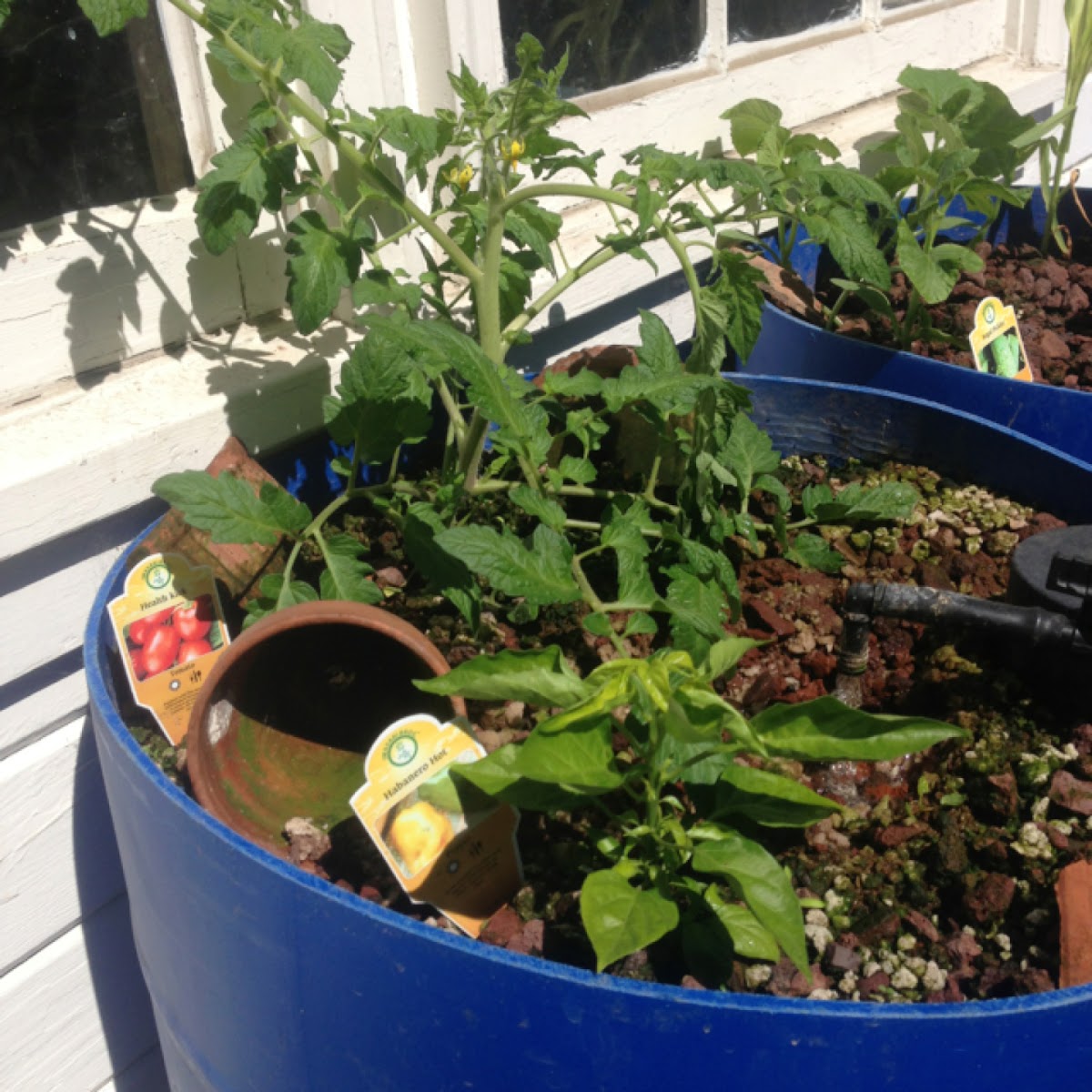
Aquaponics is the union of Hydroponics (growing plants without soil) and Aquaculture (raising fish). The concept dates back thousands of years to ancient Egypt and the Aztecs, who built floating islands for growing crops in canals where they raised fish. Ancient far East cultures, like China and Thailand, raised Koi in their rice paddies. The Creole peoples in the Southern United States introduced Crawfish to their rice paddies because it offered an additional food source for the farmer - a practice that was later picked up in China. What do all of these farming practices have in common? They all use raw marine waste as the sole nutrient source for the plants. When the conditions are right, bacterial cultures convert the raw ammonia waste into Nitrites (Nitrosoma sp. bacteria) then into Nitrates (Nitrospira sp. and Nitrobacter sp. bacteria) which are readily available for plants to use. These same bacteria are responsible for the Nitrogen Cycle in soil, but it is much easier to create the ideal conditions (pH, temperature, available oxygen) for the bacteria in water. While it is possible to measure soil temperature and pH the process is time consuming and you can never be sure that the sample collected for testing represents the whole grow bed. Poorly distributed buffers like limestone can easily create pH hot spots and the shade from the growing plants can fluctuate the soil/root temperatures. Furthermore, oxygen concentration in soil is exceedingly difficult to control. One accidental over-watering can deplete the soil of oxygen, kill off the active bacteria cultures, and drown the plant (plants require oxygen at the roots to exchange nutrients). In aquaponics and hydroponics, the water is heavily aerated (introducing dissolved oxygen) and circulated to ensure a uniform pH and temperature, which can be monitored continuously by digital meters; pH can also be verified using simple aquarium test kits.

In a soil-less grow, nutrients are available as the plants need them. In soil, time-release fertilizers are used to ensure that nutrients are available until the next application. However, these time-release fertilizers often run off during the next rain and are a huge contributor to polluted water supplies. Fertilizers intended for hydroponics should not be used in soil because they will drain off before they even have a chance to be metabolized by the Nitrifying bacteria in the soil. Plants will stress during the "feast or famine" presented by nutrient overdose, followed by zero nutrients until the next watering.

So, by now you may see the benefit of soil-less over soil gardening, but you may be asking "why not hydroponics?" The simple answer... hydroponics nutrients are bottled in a salt form to ensure shelf-life rather than their whole, organic, form. In the absence of oxygen (e.g. a bottle of fertilizer on a shelf), Denitrifying bacteria such as pseudomonas sp., alkaligenes sp., and bacillus sp., would break down whole organic matter and release Nitrogen gas - causing the fertilizer to ferment. To avoid this, fertilizer companies ship only salt-based fertilizers or organic fertilizers with an antimicrobial agent (which also hinders the Nitrifying bacteria in your system when you need it most). Salt-based fertilizers must first be broken down from their salt form before they can be used. Then, these salts accumulate in your system which limits the plants ability to uptake water and nutrients. To combat this, hydroponics growers frequently replace their water - resulting in a costly loss of nutrients, wasted water, and environmental pollution. With this frequent water change, a hearty bacteria culture does not have time to establish. Aquaponics suffers from none of these setbacks, because nutrients are continuously produced fresh and ready for the plants to use. The key is the bacteria culture. Like a fine wine, an aquaponics system needs to age to become established. As the system ages, the bacteria culture grows and becomes more robust. As the bacteria culture grows it is able to process more waste and produce more nutrients... meaning it can support more plants or plants with higher nutrient demands. A well-establish aquaponics system can produce roughly 30% higher yield and 30% faster growth rate than a hydropinics system (which is already 50% faster than soil-based growing).

Food for Thought: The most common fertilizers are potassium nitrate and ammonium nitrate. Both are harmful if swallowed/inhaled/ingested and if they come in contact with skin they should be thoroughly washed away. Both are most commonly made from chemically processed salts extracted from mined minerals. Both are used in making explosives. Both have extensive handling and disposal instructions. Fish poop... well, that's already in the rivers, and as gross as it may sound, is perfectly safe to drink. Which would you rather have traces of in your crops?

Stay Tuned for More Updates! Like. Share. Comment. Post. Whatever you feel is right. More to come soon. Please vote on the poll to the right if this is the section you would like to see expanded next, thanks!

Thursday, May 24, 2012

DIY Vegetable Oil

Vegetable oil can be used for many purposes, including cooking, making margarine, or making soap. Used vegetable oil can be saved to make bio-diesel. Due to the time involved in making the oil, and the inherent value of the fresh oil it is not economical to make oil just for the purpose of making bio-diesel. Instead, it is recommended that used oil be washed before converting to bio-diesel. But that's another topic. Let's get on to making your own vegetable oil!

 There are commercial scale ways to make vegetable oil, but this blog post focuses on a do-it-yourself method using a hand-powered oil press. I use the Piteba oil press. It can be used to press oils from sunflower seeds, soybeans, canola, safflower, walnuts, almonds, and many other nut and bean sources.

To set up the oil press, you first need to create a funnel for the seeds using a plastic bottle, as shown in the picture to the left. You'll also need to set up a jar to collect the oil. The oil press comes with a small lamp, but you will need to provide the lamp oil. I've included a link below. Colored lamp oil works best because it burns hotter... it also looks cooler! The press works by heating up the seeds just before they are slowly pressed through a small opening at the end. As the crank is turned, oil comes out of the opening above the jar, and a dry mash is expelled from the end. This dry mash makes a great high-protein food source for chickens or can be used for cooking. I prefer to use sunflower seeds with the shells included because the shells are high in protein (which is good for the chickens) and in terms of oil-by-weight, it is not worth the extra cost to by pre-shelled seeds. This time of year (late spring) you can buy a 40 lb bag of seeds from PetCo or Fred Meyer for $30, or from the link below for $24, or you can find them in late Fall for as low as $17 for a 40 lb bag. A 40 lb bag will produce about 2 gallons of sunflower oil. At today's prices, that's about $0.09/oz, in the fall it drops to about $0.06/oz. Just for comparison, I've included a link to sunflower oil on Amazon, at $18.78 for 96 oz. Making it yourself saves around 50%... and you know exactly what went into it!
When you press your own oil, you will get some sediment in the oil. This will eventually settle out after a few days to a week, or you can "siphon" it through a rope. The oil will wick up the rope and down into a collection jar, leaving the sediment behind, as shown in the picture on the right.
If you choose you let your oil settle out over time, you can either siphon or pour the clean oil off the top or just use it as is. Personally, I like to use the sediment for oiling the grill, because it doesn't affect the flavor from the grill. If anything, it adds a pleasant smokey flavor. The picture to the right shows some sunflower oil that has separated after a few days. It has a beautiful golden color.
Making your own oil can be fun, rewarding, and cost effective. It's especially nice knowing exactly what went into your oil, knowing that you are saving the environment by eliminating the need to ship and package the oil, and you can experiment with a wide variety of nuts and seeds to see which oil you like best. So go give it a try. And remember, you can save your used oil to make bio-diesel. Even if you don't want to tackle the project of making your own bio-diesel, someone will buy the used oil from you for a decent price. I have seen used cooking oil selling from $1.80-$3.60/gallon.